Project Scope
Design a differential swerve drive module that steers and drives a wheel using two motors.
Project Idea
- Standard swerve modules use a dedicated motor for drive and another for steering
- Distributing both functions across two motors could increase peak available power for steering or driving
Design Solution
- Two motors drive a bevel gear differential housed in the module
- 3D-printed bevel gears with integrated ball bearing raceways
- Gates belt drive transmits power from the motors into the differential housing
- Thrust bearings support the rotating output stage
- Encoders on each motor derive angular position and velocity for a PID controller
Prototype
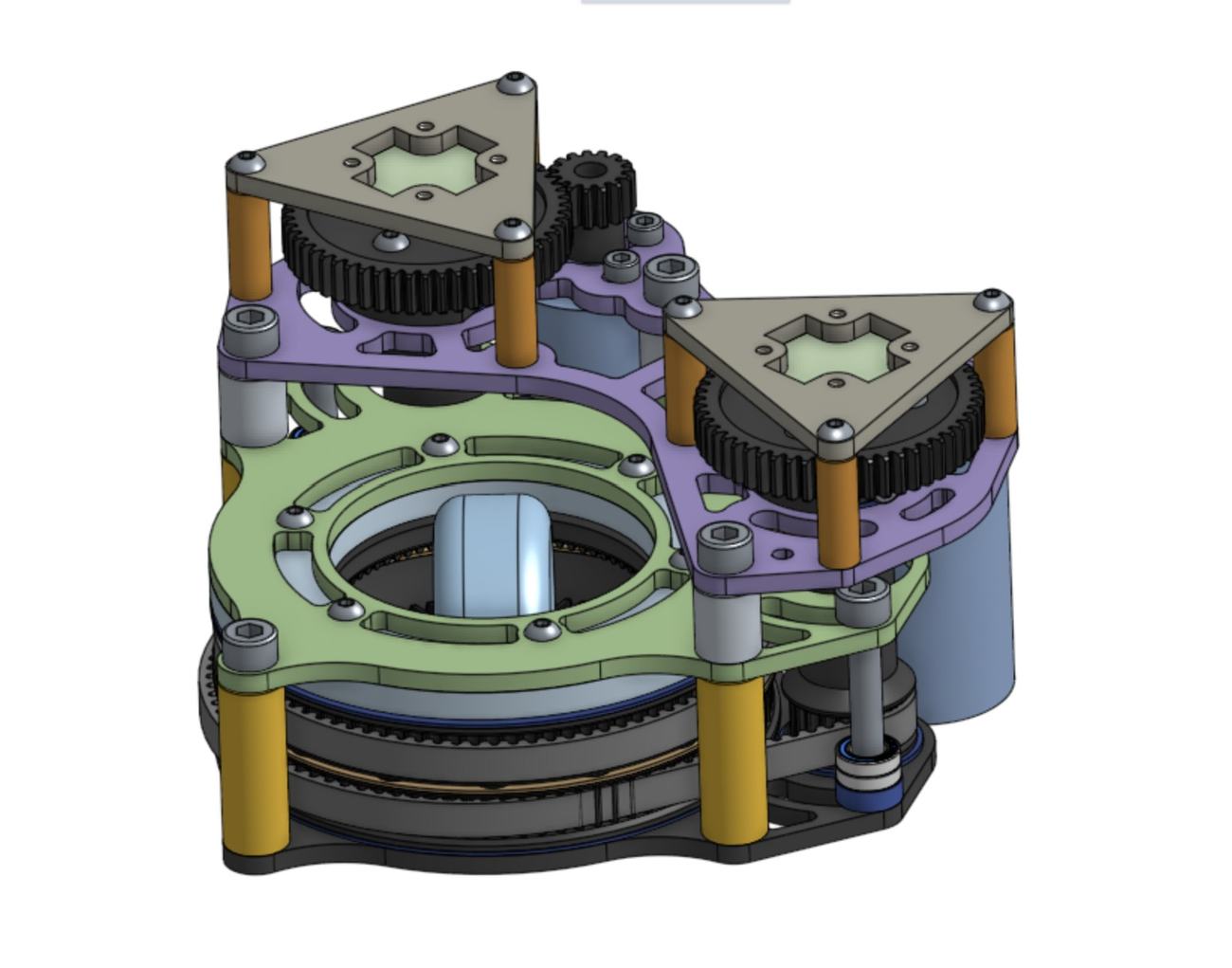
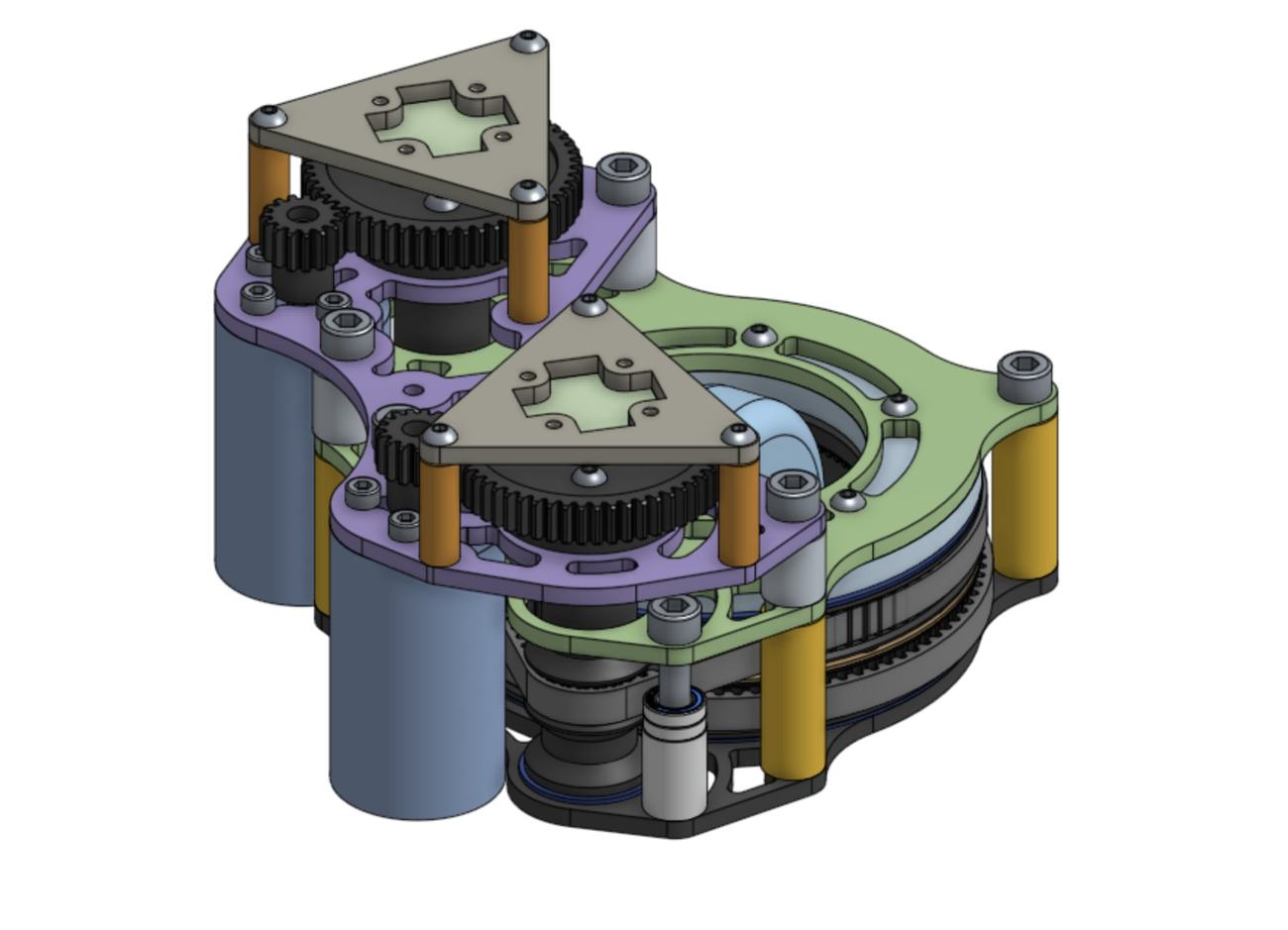
- Full module modeled and detailed in CAD
- Assembly designed for laser-cut plates, 3D-printed gears, and standard belts, bearings, and hardware
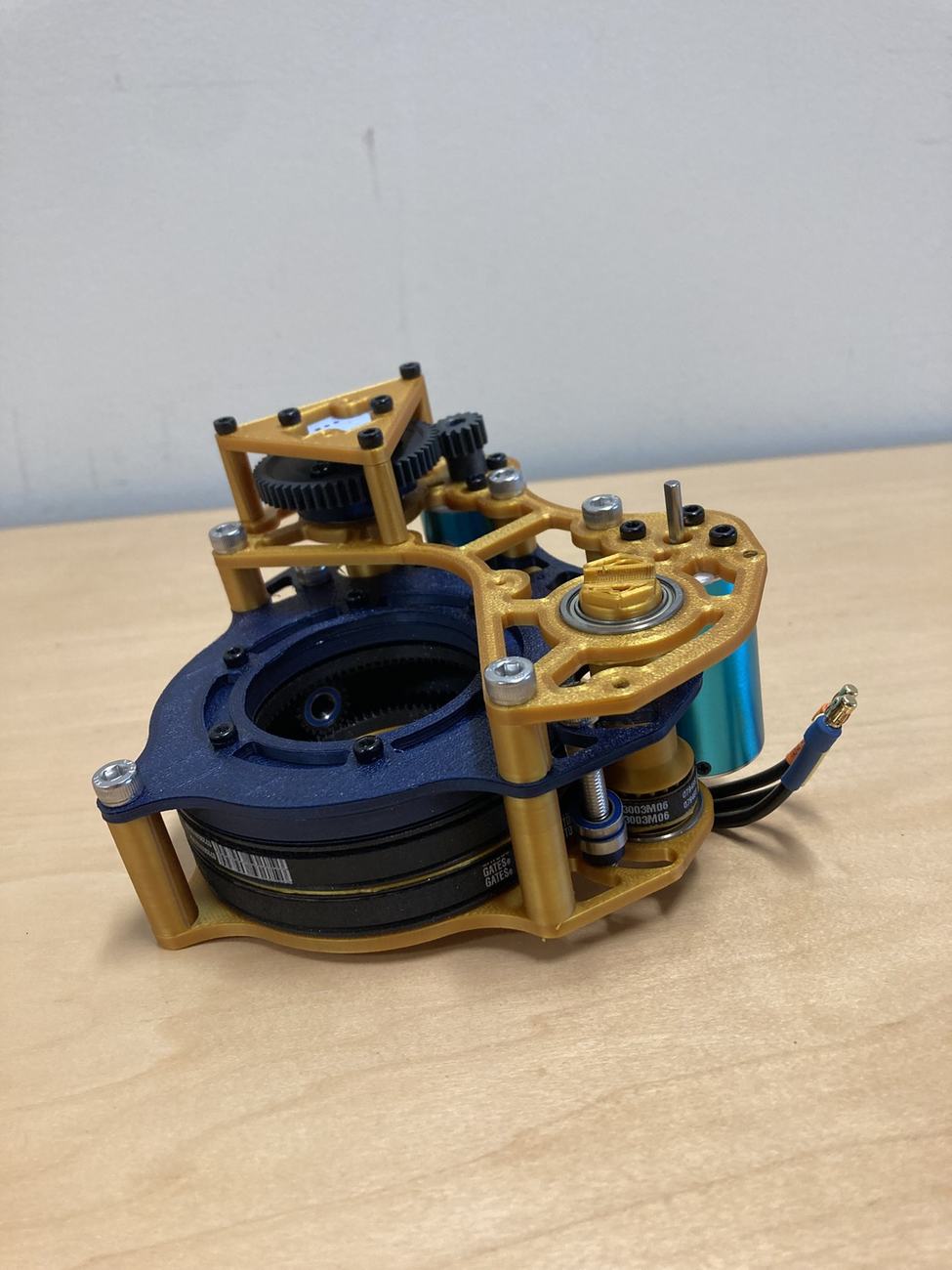
- Initial prototype 3D printed to validate kinematics and the controller
- Further development needed for a robot-ready module
Project Summary
This is a personal project inspired by the standard swerve drive modules I worked with in FIRST Robotics. A typical swerve module uses one motor to drive the wheel and a second to steer it. A differential swerve module derives both functions from two motors connected with a differential. Matched speeds drive the wheel straight, and a speed difference between the two motors steers it. I modeled the module in CAD, working through the bevel gear differential, belt-driven power transfer, and bearing arrangement needed to package the mechanism into a single compact unit. The assembly is designed for laser cut plates, 3D printed gears, standard belts, ball bearings, and hardware. The initial prototype was 3D printed and was used to validate the kinematics and controller. Further development would be required to build a module ready for a robot.